
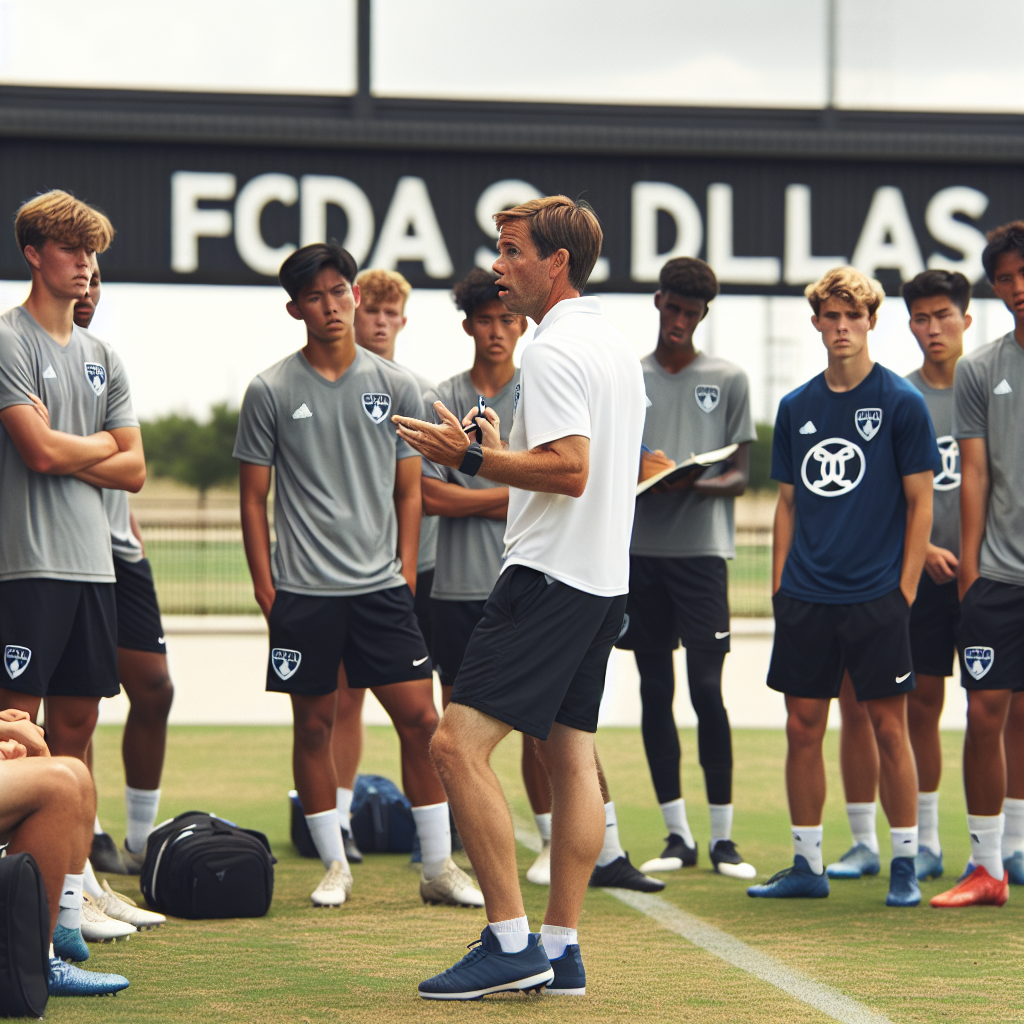

You’ve seen it happen: two players with similar talent, but only one ends up with multiple college offers. Often the difference isn’t technical ability; it’s how well they tap into the FC Dallas coach college recruiting network or a similar club network. If you’re serious about playing in college, you can’t just hope someone notices you—you need to understand how these networks really work and how to move through them with intention. Table of Contents
Understand how coach recruiting networks truly drive college decisions
Build genuine trust so coaches want to open their network for you
Equip your FC Dallas coach with clear data, video, and character stories
Use the network for D1, D2, D3, NAIA, and JUCO, not just dream logos
Align parents, players,
Turn recruiting connections into lifelong mentors and career bridges
Key Takeaways Key Idea Why
It Matters Immediate Action You Can Take Coach networks run on trust and reputation College coaches rely heavily on trusted club recommendations Ask your coach how they prefer to communicate with college staffs and align with that You must equip coaches with clear, organized info Busy coaches promote players who are easy to present Create a one-page recruiting profile and share it with your coach this week The FC Dallas coach college recruiting network reaches all levels Real opportunity exists at D1, D2, D3, NAIA, and NJCAA List 10 realistic programs across different divisions and discuss with your coach
1. Understand how coach recruiting networks truly drive college decisions
When you hear people talk about the FC Dallas coach college recruiting network, they’re really talking about relationships college coaches have learned to trust over years. A single text from a well-respected FC Dallas coach can carry more weight than 50 cold emails from a player. That’s not because your email doesn’t matter; it’s because college staffs are drowning in communication and lean on people who consistently send them honest, well-prepared players. Soccer Recruiting Guidance for Parents:] Networks are also specialized. One FC Dallas coach might have deep connections in the Big 12 region, while another regularly places players at strong D2 or high-academic D3 programs. When you understand that, you stop asking, “Can you get me to any D1?” and start asking, “Which programs actually trust your opinion and fit my profile?” That’s where real progress starts. How to Choose Christian Colleges for] You’ll also see why timing is huge. Contact during NCAA quiet or dead periods is restricted, so coaches often frame conversations around the NCAA recruiting calendar. Knowing basic rules from reliable summaries on NCAA soccer recruiting (D1 D2 D3) helps you speak the same language and avoid missteps. NCAA soccer recruiting (D1 D2 D3):
Ask your coach which college staffs they talk to most often
Learn how early those programs usually identify your position
Clarify which coach on your staff handles most college conversations Type of Connection What It Usually Means How You Should Respond Long-term trusted relationship Coach has placed multiple players there successfully Treat as a high-priority option; research deeply and communicate well New or developing relationship College staff is interested but still learning the club pipeline Be extra prepared and professional to help your coach build that trust Tournament-only contact Coach mainly sees you at showcases Confirm they have your updated profile and schedule every season
Pro tip: In your next meeting, ask, “Which three schools trust your judgment most for players like me?” Then write those down and study them before any outreach.
2. Build genuine trust so coaches want to open their network for you
The FC Dallas coach college recruiting network doesn’t open up just because you’re talented. It opens when coaches believe you’ll reflect well on their name. They’re staking part of their reputation every time they tell a college, “You should seriously consider this player.” If you’re late, disorganized, or indifferent to feedback, they’ll hesitate to go to bat for you, even if your technical ability is strong. College placement for FC Dallas players:
Trust is built in small, boring moments: showing up early, staying late, responding to messages quickly. When a coach asks you for GPA or test scores, send the exact info, clearly formatted, without reminders. That shows you’re reliable. And when they give you hard feedback about your defending or fitness, resist the urge to defend yourself. Ask clarifying questions, then show visible improvement over the next month. Soccer Recruiting for Transfer Portal Athletes:
If your parents are involved, that matters too. Respectful, calm parents make it far easier for coaches to make strong recommendations. If you haven’t yet, point them toward practical Soccer Recruiting Help for Parents and resources that align everyone around the same strategy. Soccer Recruiting Help for Parents and
Reply to every coach message within 24 hours when possible
Track your grades, test scores, and key stats in one shared document
Ask your coach once a month, “What’s one thing I can improve this week?”
Pro tip: Treat every training session like a mini-evaluation for a college call. The habits you show daily are exactly what coaches describe when they recommend you.
3. Equip your FC Dallas coach with clear data, video, and character stories
College staffs decide quickly. If your FC Dallas coach can’t send a clean snapshot of who you are, they’ll move on to players who are easier to evaluate. To use the FC Dallas coach college recruiting network well, you need to hand your coaches a tight, accurate package: soccer CV, highlight video, academic profile, and a short personal story that reflects your values and goals.
Your video doesn’t need professional cameras, but it does need clarity. One 4–6 minute highlight with your jersey clearly visible, position noted, and clips organized by theme (defending, passing, finishing) is far more helpful than three random YouTube links. Pair that with a simple one-pager: name, grad year, position, height, GPA, test scores, club and high school teams, plus a short paragraph about what you’re looking for in a college environment.
For players and families of faith, you might add a line about spiritual fit and use resources like How to Choose Christian Colleges for soccer players to frame that conversation. That way, when your coach texts a Christian college staff, they’re not just saying, “She’s a good winger,” but, “She’s serious about academics and faith; your environment fits her well.”
Keep your highlight video updated every 6–9 months
Use one shared folder (Google Drive or similar) for all recruiting docs
Include your academic rigor (AP, IB, honors) on your profile
Pro tip: Before a showcase, email your full profile and video link to your coach and say, “Here’s everything in one place in case any coaches ask about me this weekend.”
4. Use the network for D1, D2, D3, NAIA,
and JUCO, not just dream logos Many families quietly assume the FC Dallas coach college recruiting network is only “worth it” if it ends in a D1 logo. That mindset leaves a lot of great opportunities on the table. Your coaches usually have solid connections across NCAA divisions, NAIA, and strong NJCAA programs. Those paths can lead to scholarships, playing time, and eventually even transfers into bigger conferences if you crush it on the field and in the classroom. The smartest players ask, “Where can I grow, play, and graduate?” instead of only, “Can it be D1?” Talk with your coach about realistic levels based on your current ability, speed of play, and academics. Pair those conversations with resources that explain the differences between levels and rules, like official NCAA recruiting information or overviews from sites such as the NCAA’s Guide for the College-Bound Student-Athlete. And don’t ignore lateral or second-chance paths. Some players start at two-year colleges, then move on. If that’s you, your coach’s connections and guides on Soccer Recruiting for Transfer Portal Athletes can help you navigate those transitions strategically, not reactively.
Ask your coach for two realistic targets at each level (D1, D2, D3, NAIA, NJCAA)
Research roster sizes and graduation rates for each program
Be honest about whether you’d rather play big minutes at a smaller school or fight for time at a powerhouse
Clarify your target major and academic goals first.
Assess level of play with honest feedback from coaches.
Align school list with both soccer level and academic fit.
Update your list every six months as you develop.Pro tip: Create a three-column list: “Dream,” “Reach,” and “Realistic,” then ask your coach which column is most aligned with how college staffs currently see you.
5. Align parents, players,
and coaches so communication stays healthy and clear
When the FC Dallas coach college recruiting network is working well, it feels like everyone is rowing in the same direction. When it’s not, you feel tension: parents bypass coaches, players send uncoordinated messages, and college staffs get mixed signals. You can avoid that by setting clear roles early. Decide who handles what: player emails to college coaches, parents tracking visits and finances, and club coaches managing coach-to-coach calls.
Business professionals often bring corporate habits into recruiting—spreadsheets, project plans, weekly check-ins. That can be a huge asset if you keep it relationship-centered instead of transactional. Schedule a short family–coach meeting once or twice a year specifically about recruiting. Share your school list, ask where your coach sees your fit, and listen carefully, even if the feedback is humbling.
To keep parents informed without micromanaging, you can share practical resources like Soccer Recruiting Guidance for Parents so they feel equipped but not forced to run the entire process. When everyone is on the same page, your FC Dallas coach can make strong, consistent statements that college staffs will trust.
Use one shared document for your target school list and visit notes
Let the player send most emails; parents can review before sending
Ask your coach how often they’re comfortable giving recruiting updates
Pro tip: Ask your coach, “How do you prefer parents communicate about recruiting—email, short meetings, or only through me?” Then stick to that plan consistently.
6. Turn recruiting connections into lifelong mentors and career bridges
The FC Dallas coach college recruiting network isn’t just about where you sign; it’s about who will still answer your call 10 years from now. When you treat coaches and college staffs as long-term relationships, not stepping stones, doors keep opening—internships, grad school references, coaching opportunities. You’re building a professional network before you’ve even finished high school.
That long view also takes pressure off the decision itself. Yes, you want the right fit, but remember: many players transfer, change majors, or discover new passions. Guides like College placement for FC Dallas players show how thoughtful processes help reduce regret, but your character and work ethic ultimately determine how much value you get from any program.
Stay intentional after you commit. Send your club coaches quick updates once or twice a year. When you’re in the transfer portal or exploring a career shift, a coach who remembers your humility and consistency is far more likely to re-engage their network on your behalf. Resources about Soccer Recruiting Help for Parents and families remind everyone that this is a journey, not just a signing-day photo.
Keep a simple contact list of all coaches you’ve built real relationships with
Send a short thank-you note to coaches after big milestones
Ask for honest feedback even after you’ve committed to a program
Pro tip: Every time a coach advocates for you, write down what they said about your strengths. Those phrases become the foundation for future resumes, bios, and interviews.