
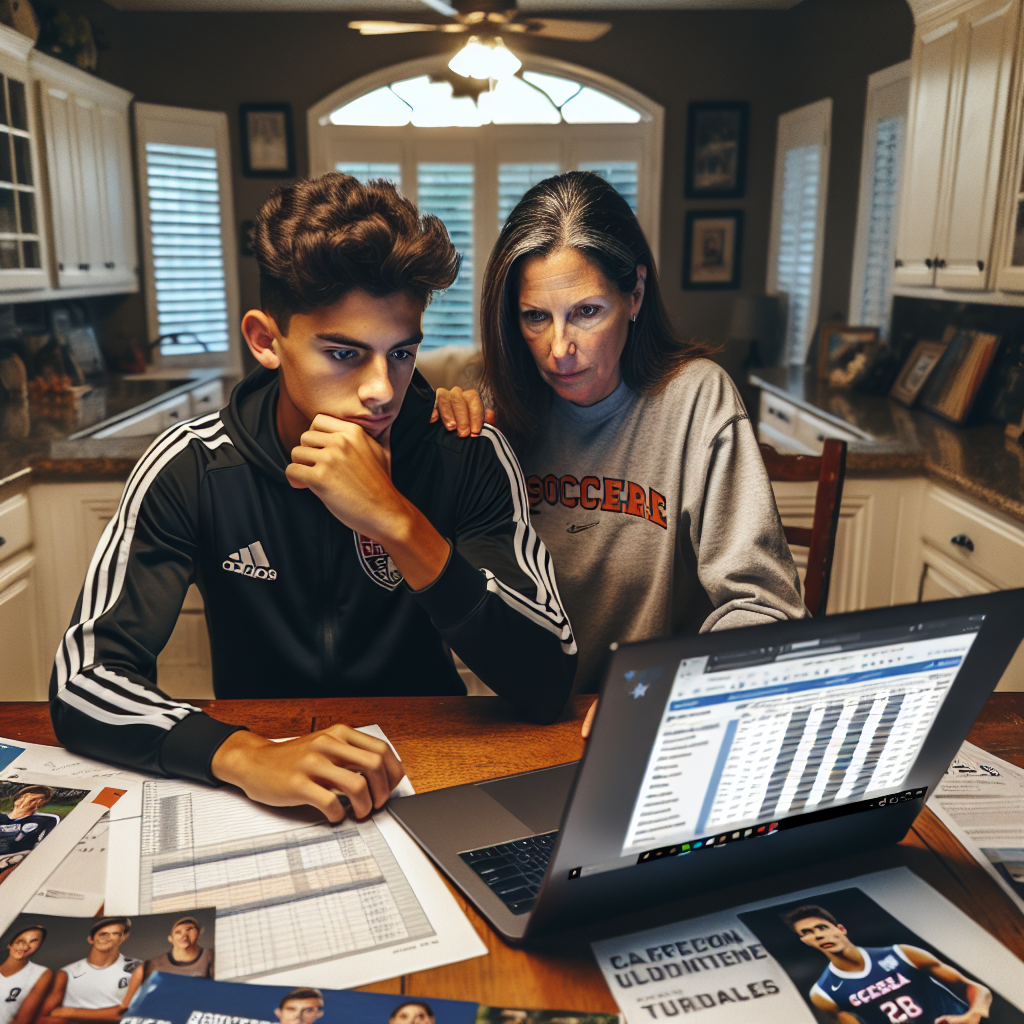

Families of high school soccer players often spend thousands on tournaments, private training, and highlight videos...then discover as juniors that no college coaches are actually calling. Sound familiar? The gap usually isn’t effort, it’s strategy. High school soccer players college placement success comes from choosing the right mix of tools, people, and platforms—not just chasing exposure. In this guide, we’ll walk through the main options, where they genuinely help, where they fall short, and how busy, professional families can build a clear, realistic path to the right college program. Table of Contents
- 1. Understanding the college placement landscape
- 2. Recruiting platforms and databases:
- 3. Showcase tournaments, ID camps,
- 4. Club coaches, high school coaches,
- 5. One-on-one college soccer placement consulting for serious families
- 6. Building your customized college placement game plan this season
Key Takeaways Option Best
For Biggest Strength Key Limitation Recruiting Platforms Tech-comfortable families on a budget Scale and basic communication tools Limited personal advocacy Camps & Showcases Players ready to be evaluated live Direct exposure to specific staffs Expensive and easy to overdo
- 1:1 Consulting Serious families wanting a clear, tailored plan Personal guidance and curated coach outreach Higher cost than DIY options
1. Understanding the college placement landscape
for high school soccer players
When families talk about high school soccer players college placement, they often mean a single thing: getting seen by the right coach. The reality is more layered. You’re balancing academic fit, financial aid, playing time, geography, and—if faith matters—spiritual environment. On top of that, each level (NCAA DI, DII, DIII, NAIA, NJCAA) has different timelines, rules, and expectations. College Soccer Recruiting for Christian Athletes:
Think of the ecosystem as five main tools: online recruiting platforms, showcases and ID camps, your club and high school coaches, private consulting, and your own consistent communication. Most players don’t need everything at once, but they do need the right combination in the right order. That’s where many families burn out: lots of activity, little strategy. College soccer placement consulting: 7 claves
If you’d like a practical step-by-step breakdown of early stages, the guide Soccer recruiting for high school players: walks you through how to get organized long before senior year pressure hits. Soccer recruiting for high school players:
- Clarify academic, athletic, and financial priorities first.
- Map target levels (DI, DII, DIII, NAIA, NJCAA) by realistic fit.
- Choose tools that support those priorities instead of chasing hype.
Pro tip: Sit down as a family and write a one-page “ideal college fit” profile before sending a single email to a coach.# 2. Recruiting platforms and databases:
when online tools help and when they don’t
Online recruiting platforms promise to connect high school soccer players with thousands of college coaches. For high school soccer players college placement, they can be helpful as an affordable database, a way to organize emails, and a central home for your video, transcripts, and schedule. If you’ll actually use the tools weekly, the modest subscription can be a fair trade. Soccer Recruiting for High School Players:
The catch? These platforms rarely create real interest on their own. Coaches are flooded with generic messages. What moves the needle is a targeted, personal email plus a short, clear highlight video and game schedule. Think of the platform as infrastructure, not a magic ticket. Families who treat it like a CRM—tracking which coaches opened, replied, and watched—tend to get the most out of it. College Soccer Placement Consulting: 7 Proven
If you want to compare software, services, and systems beyond just platforms, the article College Soccer Recruiting Process: 7 Best breaks down tools that complement, not replace, true relationship-building with coaches. College Soccer Recruiting Process: 7 Best
- Use filters to identify realistic schools instead of mass messaging.
- Keep your profile video under 4–5 minutes with time-stamped key plays.
- Log every coach interaction and follow up on a predictable schedule.
Pro tip: Before paying for a platform, email three college coaches and ask which ones they actually check often—and which they ignore.# 3. Showcase tournaments, ID camps,
and clinics: smart exposure instead of fatigue
Showcases and ID camps are where high school soccer players college placement becomes very real: a coach is either circling your name on a roster or not. The good news is you don’t need 15 events a year. You need a small number of the right events, at the right time, with the right coaches already aware that you’ll be there.
Multi-college ID camps (often at neutral sites) are efficient when you’re still exploring levels and regions. School-specific ID camps work best once a program is already on your targeted list and you’ve traded emails with that staff. And showcase tournaments make sense if your club staff actively invites coaches and tracks which programs attend.
For faith-centered families deciding which environments align with your values as well as your athletic goals, College Soccer Recruiting for Christian Athletes: offers examples of programs where character and spiritual growth are woven into the team culture.
- Email coaches 7–10 days before an event with your schedule and jersey number.
- Focus on 3–5 well-chosen events a year, not every camp on Instagram.
- Evaluate camps by coach list, not marketing photos.
Pro tip: After each event, write a 10-minute reflection: what went well, what didn’t, and which coaches you’ll email within 48 hours.# 4. Club coaches, high school coaches,
and personal networks as placement engines
Many families overlook the most powerful (and free) resource for high school soccer players college placement: a coach who’s trusted by college staffs. When a club or high school coach sends a short, honest note—“You should watch this player; she fits your style and culture”—it usually lands far more strongly than any platform notification.
Reality check: not every coach has the time, contacts, or mindset to advocate well. That doesn’t mean you’re stuck. You can ask your coach for an honest evaluation of level, then request specific, concrete help: two or three emails to programs where they have real relationships. You can also build your own network through alumni, former teammates, and parents whose kids are already playing in college.
To understand what thoughtful advocacy looks like, the article Soccer Recruiting for High School Players: shares real-world examples of messages and conversations that actually get a college coach’s attention without exaggeration or pressure.
- Ask your coach, "Which level do you realistically see me playing at by freshman year of college?"
- Request targeted introductions instead of vague “help with recruiting.”
- Connect with alumni and ask about their recruiting stories and lessons learned.
Pro tip: Draft a short, factual player summary and give it to your coach so advocating for you takes them five minutes instead of fifty.# 5. One-on-one college soccer placement consulting for serious families
When you’re a busy professional trying to support your athlete, the time cost of learning the entire recruiting landscape from scratch can be huge. That’s where one-on-one guidance for high school soccer players college placement becomes attractive. A good consultant acts like a project manager and mentor: clarifying target lists, shaping emails, prepping for coach calls, and protecting your family from both hype and missed deadlines.
The key is choosing someone who prioritizes long-term growth over short-term commitments. You want honest level evaluations, transparent communication about scholarships, and realistic timelines tailored to your player’s development and academics. Beware anyone promising specific scholarships or guaranteed spots—college coaches make roster decisions, not consultants.
If you’re comparing services, College soccer placement consulting: 7 claves outlines practical criteria—including ethics, communication style, and past placements—so you’re not just buying a logo or fancy website.
- Look for consultants with multi-level placements (DI, DII, DIII, NAIA, NJCAA), not just one level.
- Ask how often they communicate with both parents and players.
- Request sample timelines or planning documents before you commit.
Pro tip: Interview at least two consultants and pick the one who asks better questions about your child, not the one who talks the most about themselves.# 6. Building your customized college placement game plan this season
Instead of copying another family’s path, build a simple, personalized plan for high school soccer players college placement. Start with a realistic target list of 20–30 schools across different levels, then segment them into reach, match, and safety categories both athletically and academically. From there, work backward: what emails, events, and video do you need over the next 6–12 months?
Use a basic spreadsheet or project management tool to track coach communication, camps, and deadlines. If structure helps, the resource College Soccer Placement Consulting: 7 Proven breaks down the exact building blocks of a year-long recruiting plan, including how often to follow up and when to adjust your target list.
As you weigh different tools and support, remember that NCAA recruiting calendars and rules (found on the NCAA’s official recruiting information pages) can affect when coaches are allowed to call, text, or host you on campus. Staying informed is part of the job, but you don’t have to do it alone.
- Block one 45-minute “recruiting night” each week for emails and planning.
- Reevaluate your target list every 3–4 months based on coach feedback.
- Keep academics and testing on the same spreadsheet as soccer tasks.
Pro tip: Treat your recruiting process like a small business: one owner (the player), clear goals, simple systems, and regular check-ins with the “board” (the family). Putting it all to gether for your family’s college soccer journey
High school soccer players college placement isn’t about who spends the most money or attends the most showcases. It comes down to clarity, consistency, and the right mix of support. For some families, that’s a lean, DIY path using one recruiting platform and a couple of carefully chosen camps. For others, especially busy professionals, it’s worth investing in personal guidance so the process feels structured instead of chaotic.
If you’d like help mapping those next steps, Empower College Consulting walks with players and families through academic planning, program research, filmed evaluation, and tailored outreach. We focus on character and long-term growth as much as roster spots and scholarship numbers, because four years of college soccer should shape who your son or daughter becomes, not just what they win.
To explore more resources and detailed strategies—from timelines to video tips—start with College Soccer Recruiting Process: 7 Best and you’ll see how the right systems can support your athlete’s goals without taking over your family’s life.
If you’re ready to build a clear, customized plan instead of guessing, schedule a conversation with Empower College Consulting and we’ll walk through where you are, where you hope to go, and which tools and support make the most sense for your family this season.**