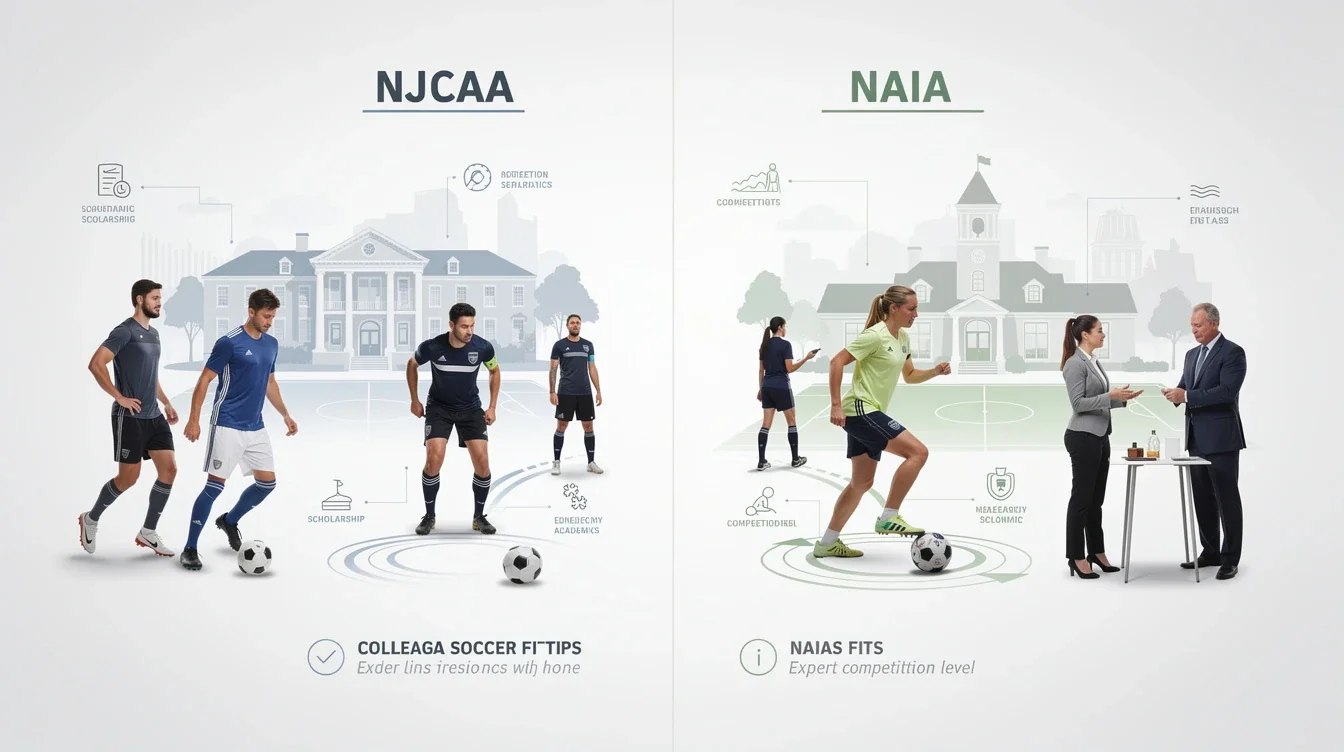

Choosing the right college soccer program is about more than the name on the jersey. It's about finding a place where you can grow—as an athlete, a student, and a person of character. At Empower College Consulting, we know the process can feel overwhelming. Whether you're a rising star or a late bloomer, understanding the differences between NJCAA and NAIA soccer can help you make a decision that fits your goals, values, and dreams. Let’s break it down to gether.
NJCAA Soccer: Opportunity and Growth
The National Junior College Athletic Association (NJCAA) offers two-year college athletic programs across the country. For many players, NJCAA soccer is a launchpad—a place to develop their game, academics, and maturity before moving to a four-year school. But it’s more than just a stepping stone; for thousands of athletes, junior colleges are communities where they find belonging and purpose.
NJCAA programs often attract student-athletes for a few key reasons. Maybe grades or standardized test scores need a boost, or perhaps you want more playing time right away. Junior colleges can be more affordable, with smaller class sizes and a tight-knit campus feel. Coaches at this level are passionate about player development, both on the pitch and in life, and they often serve as mentors who are deeply invested in your progress.
Pro tip: If you’re uncertain about your academic readiness or want to keep your options open for transfer, NJCAA soccer can be a wise and flexible choice.
NAIA Soccer: Community and Commitment
The National Association of Intercollegiate Athletics (NAIA) is home to mostly private, four-year colleges and universities. NAIA soccer programs are known for their close-knit communities, strong academic focus, and an emphasis on holistic development. While the level of play can be comparable to NCAA Division II or III, what sets NAIA apart is its flexible recruiting rules and personalized approach to student-athlete support.
NAIA schools often integrate faith, service, and character-building into the student experience. The balance between athletics, academics, and personal growth is intentional. Players who thrive in NAIA programs are often those who value mentorship and want to be part of a family-like team culture. There’s a commitment to developing not just skilled soccer players, but leaders who make an impact beyond the field.
Pro tip: NAIA schools have more relaxed transfer rules and can offer athletic scholarships. If you’re looking for immediate playing opportunities and a values-driven environment, NAIA soccer deserves a closer look.
Soccer Level and Competition: What to Expect
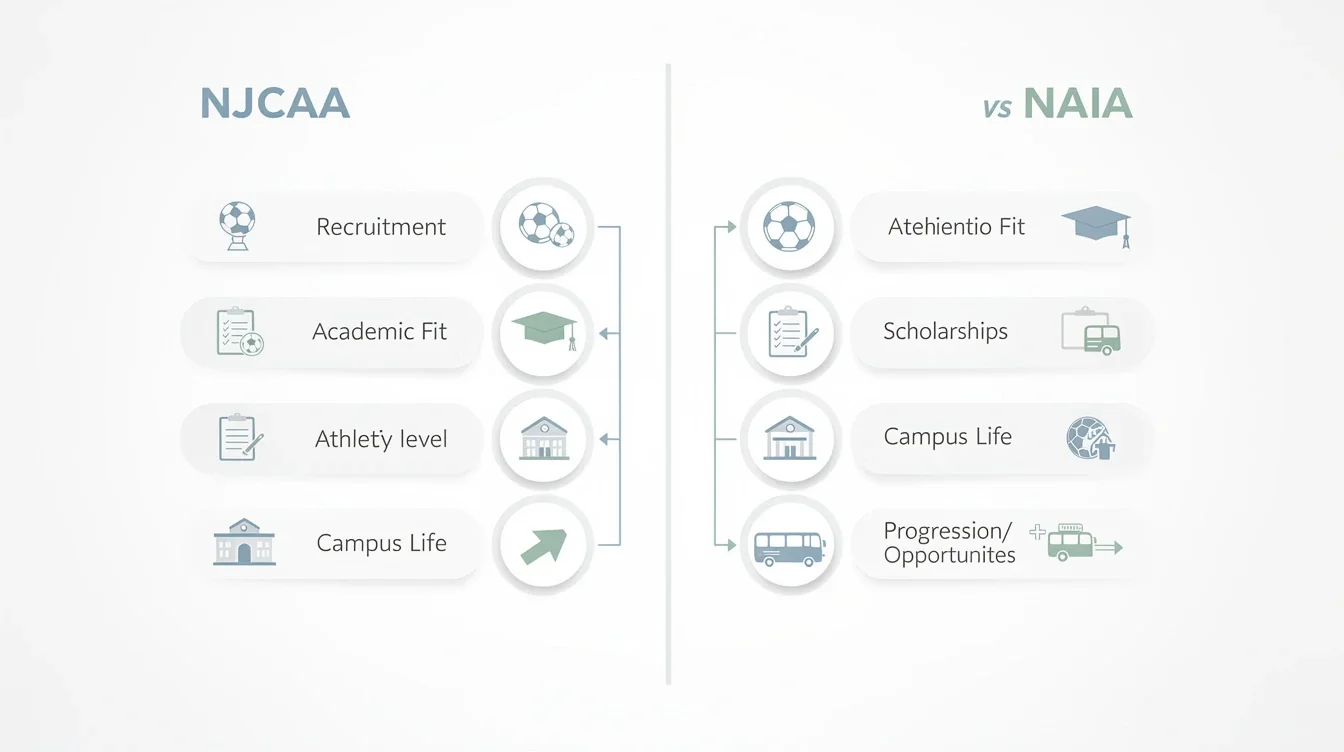
A common question we hear is, “Which level is better—NJCAA or NAIA?” The answer isn’t so simple. Both offer talented teams, passionate coaching, and opportunities to compete at a high level. The difference lies in the structure and depth of competition.
NJCAA soccer is divided into three divisions, but most scholarship opportunities are found in Divisions I and II. Some programs are national powerhouses, regularly sending players to four-year schools or even professional leagues. The schedule is intense but often shorter, with fewer travel demands, giving freshmen a real shot at meaningful minutes from day one.
NAIA soccer, on the other hand, is a four-year experience. Teams vary widely in quality, with some NAIA squads rivaling strong NCAA Division II programs. Rosters are typically older, with more international players and a higher average age. The competition can be fierce, but there’s often a supportive, family-oriented feel to training and match days.
Pro tip: Watch games online or attend matches if you can. Seeing the level of play and the team dynamic up close can help you picture where you’d fit best.
Academic Pathways and Support
The academic environment at NJCAA and NAIA schools can differ just as much as their soccer programs. Junior colleges are designed to provide a solid foundation—whether you’re aiming to transfer to a four-year school or earn a two-year associate’s degree. Academic support is robust, with tutoring and resources geared toward helping student-athletes balance their commitments.
At NAIA schools, the commitment to academics is woven into the fabric of campus life. Smaller class sizes, accessible professors, and an emphasis on service learning are common. Many NAIA schools have faith-based missions, which means you’ll find programs that nurture both your intellectual and spiritual growth.
If you struggled academically in high school, NJCAA can offer a fresh start. If you’re looking for a four-year degree and want to be surrounded by a community that values lifelong learning, NAIA might be your place.
Pro tip: Ask coaches and admissions counselors about academic support for athletes. The right environment can make all the difference in your college success.
Scholarships, Cost, and Financial Aid
Let’s talk about finances—a major factor in every family’s decision. NJCAA schools are often less expensive than four-year colleges, even before athletic aid. Many NJCAA programs can offer athletic scholarships, especially at the Division I and II level. For some families, this affordability makes the dream of college soccer possible.
NAIA schools, being mostly private, can have higher sticker prices. However, they also offer a range of athletic and academic scholarships, and many have generous need-based aid. NAIA coaches often have more flexibility in scholarship distribution than their NCAA counterparts. If you’re a strong student and athlete, stacking academic and athletic aid can make NAIA schools surprisingly affordable.
Pro tip: Don’t just look at tuition—compare total costs after scholarships and financial aid. A school that seems expensive up front could become your most affordable option.
Building Character and Relationships
At Empower College Consulting, we believe the best college fit is about more than soccer. It’s about who you become in the process. Both NJCAA and NAIA programs can help you grow into a leader, teammate, and person of faith and integrity. The right coach will challenge you to develop on and off the field, and the right environment will support your journey.
In NJCAA programs, you’ll often find coaches who are deeply committed to mentoring young athletes and helping them transition to the next level—whether that’s a four-year school or a career. The sense of community and the opportunity to make a fresh start can be life-changing.
In NAIA, the emphasis on character, service, and holistic development is woven into daily life. You’ll be surrounded by teammates and coaches who care about your growth as a person. For many, these relationships become the foundation for lifelong friendships and professional networks.
Pro tip: When you visit campus, pay attention to how coaches and players interact. The right fit will feel like a place where you’re encouraged to be your best self.
Conclusion
Choosing between NJCAA and NAIA soccer isn’t about picking a “better” or “worse” path—it’s about finding where you’ll thrive. Both routes offer incredible opportunities for growth, competition, and lifelong impact. As you explore your options, remember that your journey is unique. Get to know the people, ask honest questions, and trust your instincts about where you feel seen and supported.
At Empower College Consulting, we’re here to walk with you every step of the way—as mentors, advocates, and partners in your development as a student, athlete, and leader. Your story matters, and to gether, we’ll find the path that empowers you to reach your full potential—on the field and far beyond.