

Choosing the right college soccer program is about more than just the pitch. For student-athletes and their families, it’s about finding a place where soccer dreams and academic ambitions can grow side by side. At Empower College Consulting, we know that balancing schoolwork, training, and the big-picture goals for your future isn’t always easy. That’s why understanding the academic flexibility in NAIA and NJCAA soccer programs is so important. Let’s dive deep into how these two athletic associations stack up when it comes to supporting your unique educational journey.
Understanding NAIA Soccer Academics

NAIA (National Association of Intercollegiate Athletics) schools are often praised for their smaller campuses and tight-knit communities. NAIA programs provide an environment where coaches and faculty know you by name, not just by your jersey number. This personal connection can make a world of difference when you’re juggling classes, practices, and travel for matches.
Academically, NAIA schools offer a broad range of majors and academic support services. Many NAIA institutions are private colleges with a liberal arts focus, so you’ll find options for everything from business and education to nursing and computer science. Their flexible curriculum structures often allow student-athletes to double major, minor, or explore interests outside their main field of study.
Pro tip: If you’re passionate about developing both your mind and your game, talk to NAIA coaches about how their programs support student-athletes academically. Ask about tutoring, study hall options, and professors’ willingness to accommodate travel schedules.
NJCAA Soccer: Community College Advantages
NJCAA (National Junior College Athletic Association) schools—commonly known as junior or community colleges—provide a different kind of academic flexibility. These two-year institutions are designed for students who want to earn an associate degree, complete general education credits, or develop specific vocational skills before transferring to a four-year college.
One of the biggest advantages of NJCAA programs is their adaptability. Course loads are often customizable, with many options for part-time or full-time study. Community colleges are especially accommodating for students who want smaller class sizes, more one-on-one attention, and the chance to strengthen their academic foundation before moving on to a university.
NJCAA soccer programs also attract athletes who need more time to boost their grades, adjust to the demands of college life, or explore what academic path is right for them. For some, it’s a smart stepping stone to NCAA or NAIA programs later on.
Pro tip: Don’t overlook the power of starting at a community college if you’re still figuring out your academic or athletic direction. You’ll get valuable playing time, save on tuition, and have the freedom to grow at your own pace.
Comparing Degree Paths and Transfers
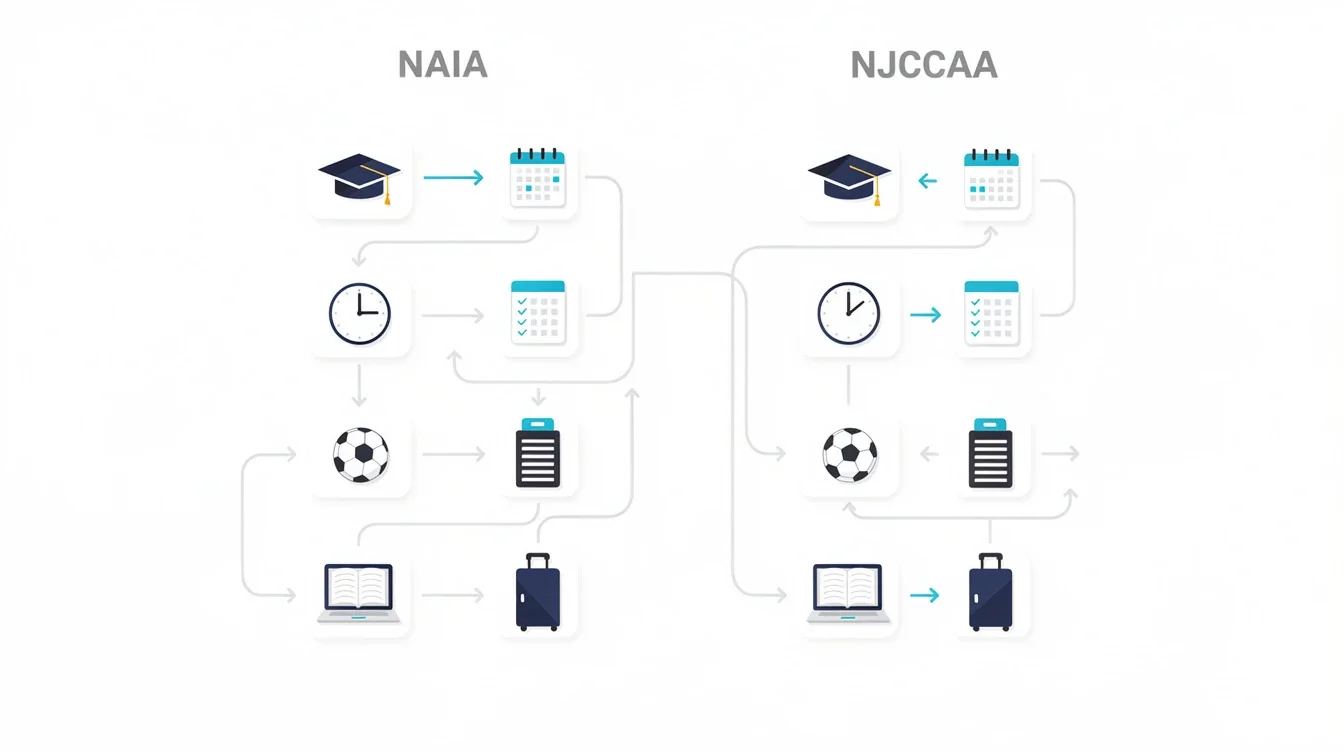
One of the most crucial questions for aspiring college soccer players is: What will my academic options look like after my playing days? NAIA and NJCAA schools offer different routes, and it’s important to know how these can impact your long-term goals.
NAIA institutions typically offer bachelor’s degrees, and some even provide graduate studies. If you know you want to earn a four-year degree while playing high-level soccer, these schools can be a great fit. The transition from NAIA to NCAA or to graduate school is usually straightforward, as credits and degrees are widely recognized.
NJCAA schools, by design, focus on associate degrees. Many student-athletes use their time in the NJCAA to complete general education requirements, then transfer to four-year institutions—sometimes with athletic scholarships waiting. Transfer agreements between community colleges and universities are common, making the process smoother for those who plan ahead.
Pro tip: If transferring is in your future, meet early and often with academic advisors. They’ll help you map out courses that will transfer easily, ensuring you won’t lose credits or time on your journey to a bachelor’s degree.
Balancing Soccer, Classes, and Life
The demands of college soccer can be intense, no matter the level. Both NAIA and NJCAA schools recognize this, but they approach it in slightly different ways.
NAIA coaches and athletic departments often work closely with academic offices to support student-athletes. This might mean flexible class schedules, study halls during road trips, or professors who understand the rigors of your athletic commitments. The focus is on helping you thrive as a whole person, not just as a player.
NJCAA programs, on the other hand, tend to offer even more flexibility. Many community colleges have evening, weekend, or online classes that work well with travel and training schedules. For student-athletes who need to work part-time, care for family, or simply want more control over their daily routine, this flexibility is vital.
Pro tip: Embrace the support systems around you—tutoring centers, academic coaches, and your teammates. Sometimes, the best advice is a study hack or encouragement from someone who’s walked this road before.
Considering Character and Holistic Growth
At Empower College Consulting, we believe that your college soccer experience should help you grow in character and faith, not just in skill and fitness. Both NAIA and NJCAA programs can nurture holistic development, but the campus culture and support systems may look different.
Many NAIA schools have a mission-driven ethos, emphasizing values like integrity, service, and leadership alongside academic and athletic success. Faith-based institutions are common, and you’ll often find mentorship opportunities, campus ministries, and community service built into the student-athlete experience.
NJCAA schools, while generally less mission-oriented, excel at meeting students where they are. The chance to explore diverse perspectives, connect with local communities, and build resilience can be just as transformative. Community college coaches and staff often take a hands-on, mentoring approach, helping you develop life skills that go well beyond the soccer field.
Pro tip: When choosing a program, ask about opportunities for leadership, service, and personal growth. A supportive, value-driven environment can make all the difference in your college journey.
Long-Term Impact on Your Journey
Your choice between NAIA and NJCAA isn’t just about the next two or four years—it’s about setting the stage for your future, on and off the field. Academic flexibility plays a big role in keeping doors open, whether your aspirations involve graduate school, a professional career, or giving back to your community.
NAIA schools are a great match for student-athletes ready to commit to a four-year path, blending athletics with a full campus experience. The relationships you build and the degree you earn can support your goals for life after soccer.
NJCAA programs, meanwhile, offer a launchpad for those who want to keep options open or need more time to figure things out. The adaptability, affordability, and supportive environment can help you build confidence and credentials before taking the next step.
Pro tip: Remember, there’s no one-size-fits-all answer. Your path is uniquely yours. The most important thing is to find a place where you can grow, learn, and chase your dreams with courage and purpose.
Conclusion
Choosing between NAIA and NJCAA soccer programs is about more than which league has the best record—it’s about what fits you: your academic interests, your athletic goals, and the kind of person you want to become. At Empower College Consulting, we’re here to walk alongside you and your family every step of the way, helping you find a college soccer home where you can thrive in every area of life. If you’re ready to explore your options and discover what academic flexibility really means for your future, let’s start the conversation. Your journey is just beginning, and we can’t wait to see where it leads.