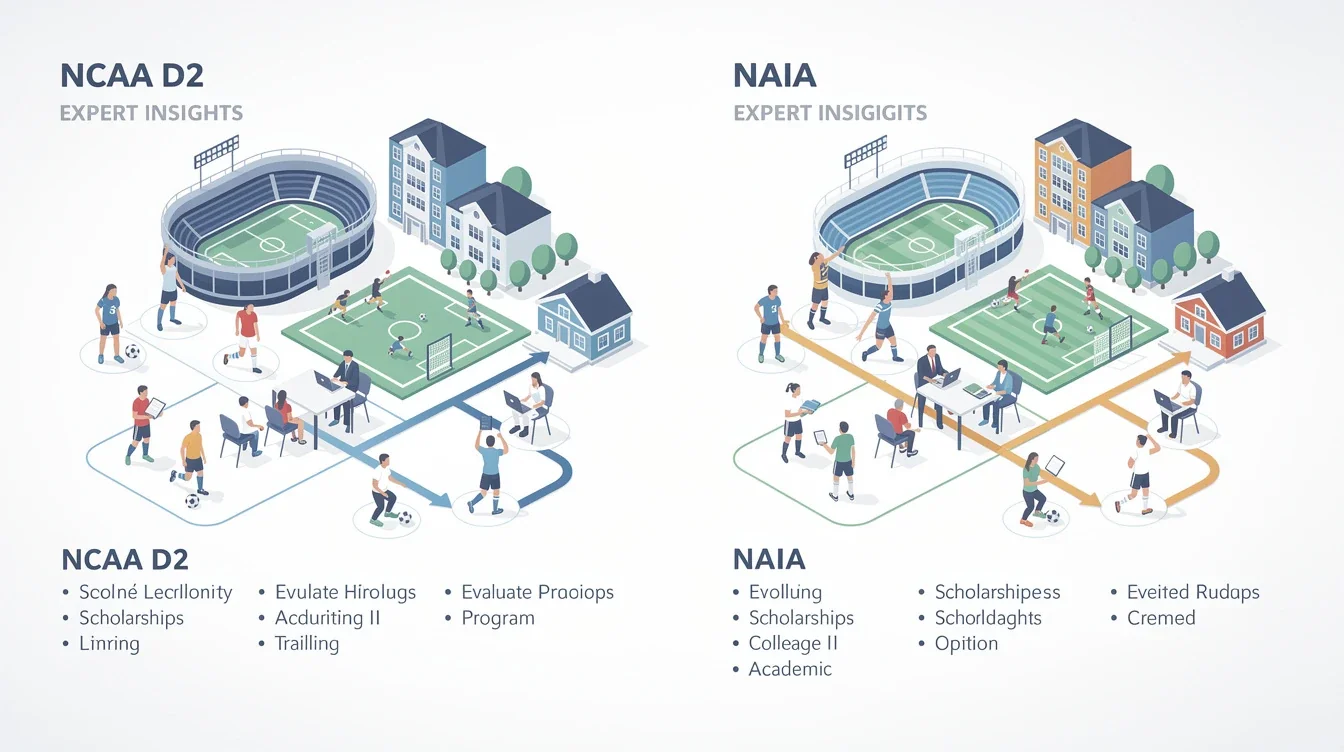

If you’re a high school soccer player dreaming of competing in college—or a parent hoping to support your child’s journey—navigating the world of collegiate soccer can feel overwhelming. Between NCAA Division II and the NAIA, there are pathways that fit a wide range of academic, athletic, and personal goals. At Empower College Consulting, we believe your recruiting journey is about more than just the next few years on the pitch; it’s about growth, character, and finding the right fit for your future. In this guide, we’ll break down the differences, help you ask the right questions, and give you a clear path to making an informed decision.
Understanding the Basics: NCAA D2 and NAIA
When it comes to college soccer, both NCAA Division II and the NAIA offer competitive athletics, scholarship opportunities, and a chance to balance academics with your sport. While the NCAA is a familiar acronym to most, the NAIA is another well-established collegiate athletic association that offers a similar level of play and its own unique benefits.
NCAA Division II schools are often medium-sized universities where athletics are important, but there’s also an emphasis on academic achievement and campus involvement. The NAIA, on the other hand, includes smaller institutions that may offer a closer-knit community and more flexibility, especially for student-athletes seeking a holistic college experience.
Pro tip: Start by listing what matters most to you—academic programs, campus size, location, team culture, scholarship potential, and coaching styles. These personal priorities are the foundation of your college search.
Athletic Experience and Level of Play
One of the biggest questions players and families ask is, “What’s the difference in the level of play?” The answer: both NCAA D2 and NAIA soccer are highly competitive, but there are some distinctions.
NCAA D2 programs often feature teams with a deep roster of talented athletes. Training schedules are rigorous, with a strong commitment expected from every player. The level of play is just a step below NCAA Division I, meaning the competition is fierce and the commitment required is substantial.
NAIA soccer, while competitive, can vary more widely from program to program. Some NAIA teams could go toe-to-toe with strong D2 programs, while others may be rebuilding or less intense. NAIA schools often attract players who want to pursue a dual passion—athletics and other campus or community involvement. This environment can be a good fit if you value balance and want to shape your own college experience.
Pro tip: Watch game film or, even better, attend matches at both D2 and NAIA schools you’re interested in. Seeing the teams in action gives you a real sense of the pace, style, and competitiveness.
Scholarships, Financial Aid, and Academic Support
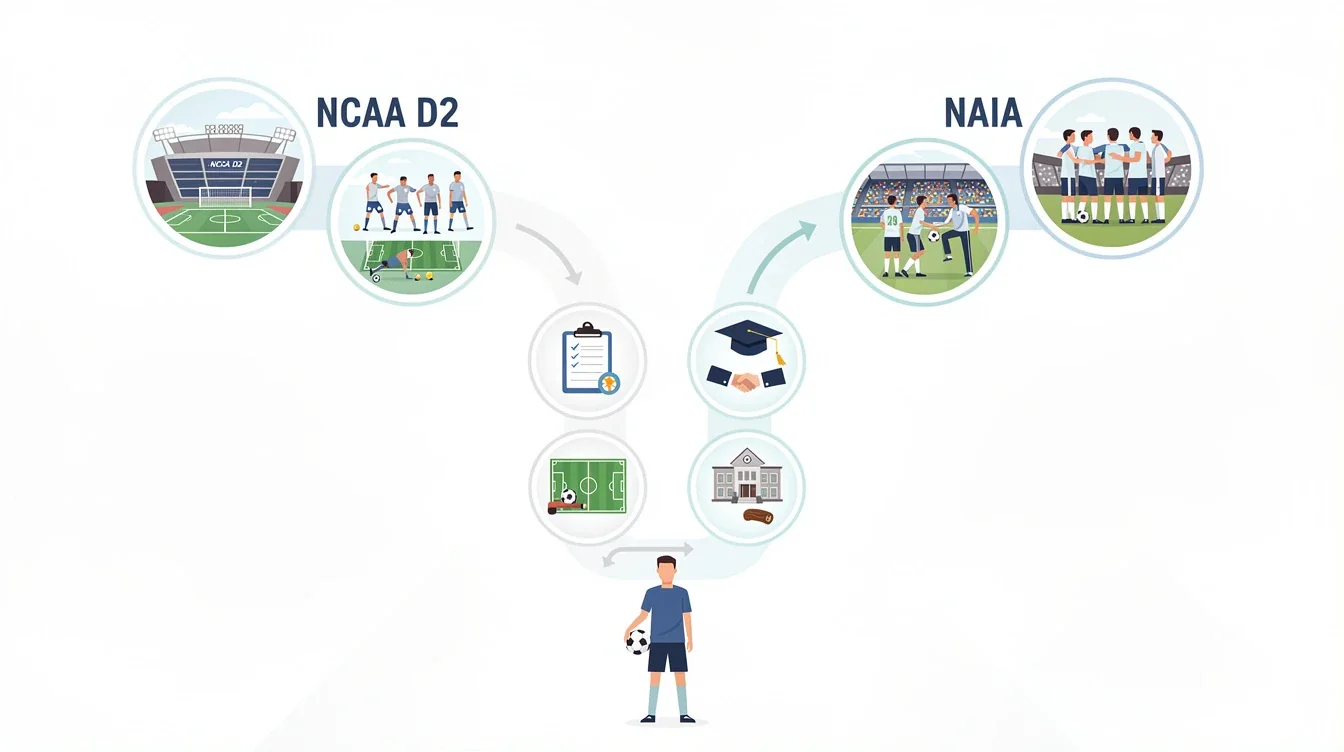
Scholarships are a critical factor in the college decision-making process. Both NCAA D2 and NAIA schools offer athletic scholarships, but the rules and resources differ.
NCAA D2 programs are allowed a set number of scholarships per team, which are typically divided among several players. Coaches may offer partial scholarships that combine with academic or need-based aid, creating a customized financial package. It’s important to ask coaches how they structure their scholarship offers and what academic support is available.
NAIA schools can be surprisingly generous, especially since they have more flexibility in how they award aid. Many NAIA institutions prioritize academic achievement, leadership, or community service, so it’s possible to stack athletic, academic, and other scholarships. The application and eligibility process is also more streamlined in the NAIA, which can speed up your recruiting timeline.
Pro tip: Don’t be shy about asking coaches for a breakdown of their scholarship process and what you can do to maximize your financial aid package. The earlier you start these conversations, the more options you’ll have.
Campus Life, Culture, and Community
The college experience is about much more than just soccer. Both NCAA D2 and NAIA schools offer distinctive campus cultures, and finding your best fit means looking beyond the field.
At many D2 schools, you’ll find a vibrant campus life with a balance between athletics, academics, and extracurricular involvement. Teams often have access to top-notch facilities, and student-athletes are recognized as key contributors to campus spirit. You’ll have the opportunity to network with peers, faculty, and alumni who share your drive and ambition.
NAIA schools tend to be smaller, which means you’ll likely benefit from smaller class sizes and closer relationships with professors and teammates. There’s often a strong sense of community and support, both on and off the field. Many NAIA institutions are faith-based, which could be an important factor if you want a values-driven environment.
Pro tip: Spend time on campus—sit in on classes, meet the team, and talk to current players. The right environment will challenge you to grow not just as a player, but as a person.
Recruiting Timelines and Eligibility
The recruiting process and eligibility requirements differ between the NCAA and NAIA, and understanding these differences is crucial for a smooth transition from high school to college.
NCAA D2 recruiting is regulated by a strict calendar, with specific windows for official visits, phone calls, and offers. You’ll need to register with the NCAA Eligibility Center, submit transcripts, and ensure you meet both academic and amateurism requirements. The process can feel formal, but it’s designed to ensure fairness and transparency.
NAIA recruiting is more flexible, with fewer restrictions on when and how coaches can communicate. You’ll register with the NAIA Eligibility Center, but the process is typically faster and less complex. This flexibility can be helpful if you’re a late bloomer, transferring, or still weighing your options as a senior.
Pro tip: Keep detailed records of all your communication with coaches, and don’t hesitate to follow up. Whether you’re targeting D2 or NAIA, proactive communication demonstrates maturity and genuine interest.
Making the Best Decision for Your Future
Ultimately, choosing between NCAA D2 and NAIA comes down to fit—athletically, academically, and personally. It’s not about which path is “better,” but which aligns with your goals and values. At Empower College Consulting, we encourage families to consider the big picture: What kind of student-athlete, teammate, and community member do you want to be? Where will you be challenged, supported, and inspired to grow?
Remember, soccer is just one chapter in your college story. The right program will invest in you as a whole person, offering mentorship, academic guidance, and opportunities to develop your character and faith. Whether you’re destined for D2 or NAIA, your journey matters—and we’re here to walk alongside you every step of the way.
Pro tip: Trust your instincts. The right fit will feel both exciting and comfortable—a place where you can see yourself thriving on and off the field.
Conclusion
Navigating NCAA D2 vs NAIA soccer options is a journey that’s uniquely yours. With clear information, honest self-reflection, and the right support, you’ll find a path that aligns with your athletic dreams and personal growth. At Empower College Consulting, our commitment is to guide you not just through the recruiting process, but into a college experience that empowers your future. Let’s take the next step to gether—your best fit is out there, and you’re more than ready to find it.